Safe Labs launches Safenet transaction checks for Safe multisig accounts
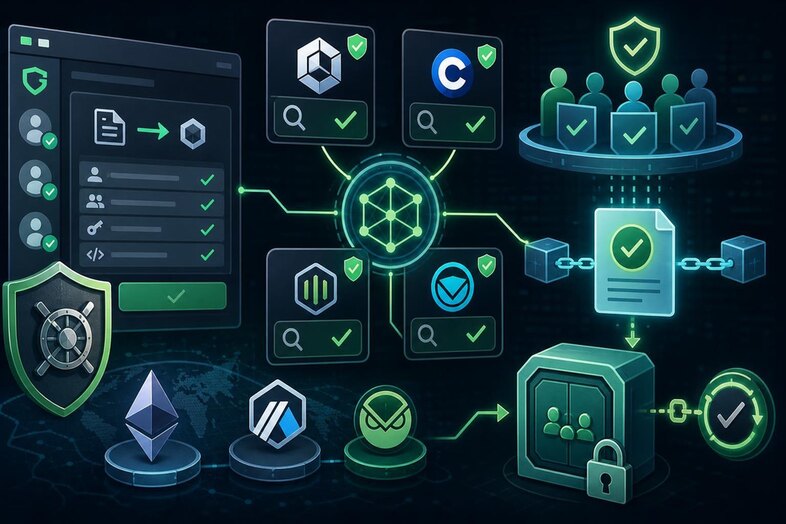
Safe Labs launched Safenet on 21 October 2026, adding transaction checks by independent security firms to Safe{Shield}, its security co-pilot for Safe accounts. The network gathers verdicts before a transaction executes and records the result onchain. Safe Pro users can access it on Ethereum, Arbitrum and Gnosis Chain.
Safenet is designed to assess what a transaction will do, rather than relying solely on a warning shown in a wallet interface. Four firms act as Sentinels: BlockSec, Candide, IntentGuard and OpenCover. Each evaluates proposed transactions and bonds its verdict, making it financially accountable under the protocol’s rules. A mistaken verdict can result in slashing.
Checks cover transaction targets and account changes
When a transaction is proposed, Sentinels assess it against the Safenet Charter, a public rulebook maintained by Safe{DAO}. Its specified checks include recipient or target manipulation, changes to an account’s owners or signing threshold, dangerous approvals, delegatecall integrity and known malicious targets.
These checks address risks that can arise even when a multisig’s cryptography works as intended. A user may sign a transaction that appears legitimate but has been altered through a poisoned address, a malicious application or a compromised front end. Safe Labs says artificial intelligence is making such attacks cheaper to create and easier to run at scale. The network is intended to add an independent review before execution, rather than asking signers to interpret an interface warning on their own.
No single Sentinel can approve a harmful transaction or block a safe one, according to the launch information. If the firms disagree, the case proceeds to arbitration. The source does not detail the arbitration process or its timing, so the operational effect of a split verdict cannot be assessed from the launch announcement alone.
Validators attest to the combined verdict
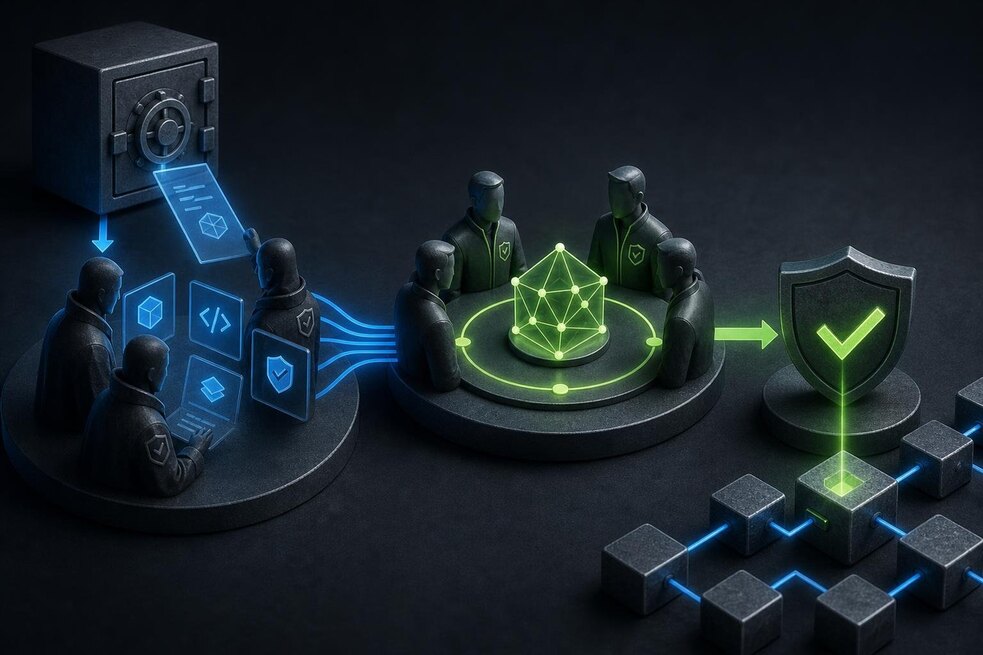
Sentinels assess transactions; a separate group of Validators combines their verdicts and attests to the result. Gnosis, Greenfield, Safe Labs and Core Contributors serve as Validators at launch. Their attestation is recorded onchain, where it can be checked publicly.
The network uses a threshold-signature scheme for Validator attestations. That arrangement means no single Validator controls the key used to attest to results. It separates the firms that review a transaction from the group that produces the combined onchain record, while putting the outcome where users can verify it.
Safe{DAO} owns and governs Safenet. The Sentinel checks follow its Charter, while the Validators attest to the combined outcome. The announcement does not describe the number of Sentinel approvals required for a verdict, the financial size of each bond or the detailed conditions for slashing. Those parameters should not be inferred from the general description of bonded verdicts.
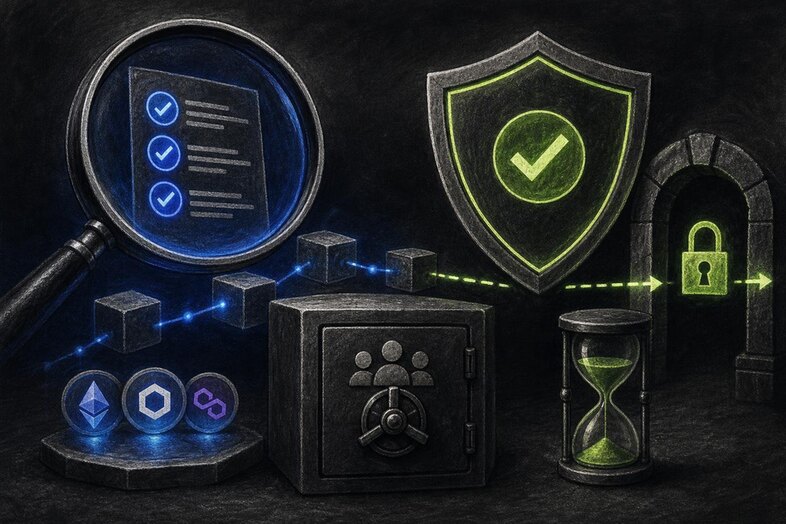
Onchain visibility arrives before transaction enforcement
At launch, Safe Pro users can view Safenet attestations in the Safenet explorer. This provides access to the recorded checks, but it is distinct from blocking transactions that lack a positive attestation. Safe Labs says visible checks will expand to all Safe multisig users in 2027.
The company also plans to make Safenet Guard available in 2027 as an optional enforcement mechanism. When activated, the Guard will allow a transaction to execute only if it carries a valid attestation for that exact transaction. That condition ties the check to the specific transaction being executed; a verdict for a different transaction would not meet the stated requirement.
Safe Labs says the Guard will include a delayed escape hatch so users retain control of their accounts. The announcement does not give a date for the 2027 rollout, describe how long the delay will be, or specify the activation steps. For now, the released functionality is transaction assessment and onchain visibility for Safe Pro users on the three named networks, not optional Guard enforcement.
Production release follows the Safenet beta
Safe Labs describes this release as the first production-ready version of Safenet, following its beta. The company says the protocol’s core components have undergone audits and formal verification. That statement applies to those components and does not establish that every transaction will be classified correctly or that account risks are eliminated.
The launch addresses a particular gap in multisig workflows: signers can authorise a transaction without recognising that its recipient, permissions or other details have been manipulated. Safenet’s proposed response is to have several bonded reviewers examine the transaction and make the resulting verdict visible onchain. Until Guard becomes available, however, users should distinguish that independent check from a rule that prevents execution.
Safe Labs CEO Rahul Rumalla said the company was bringing independent transaction verification into workflows teams already use while leaving them in control of their assets. Safe co-founder Richard Meissner separately described the onchain verdict as an independent second opinion backed by accountability. These are the company representatives’ explanations of the service; the launch materials do not provide performance measurements or a record of Safenet detecting attacks.
Safe Labs announced Safenet on 21 October 2026. It is available to Safe Pro users on Ethereum, Arbitrum and Gnosis Chain, with visible checks for all Safe multisig users and optional Safenet Guard enforcement scheduled to follow in 2027.