Safe Labs consolidates pending Safe activity in a multichain Queue Service
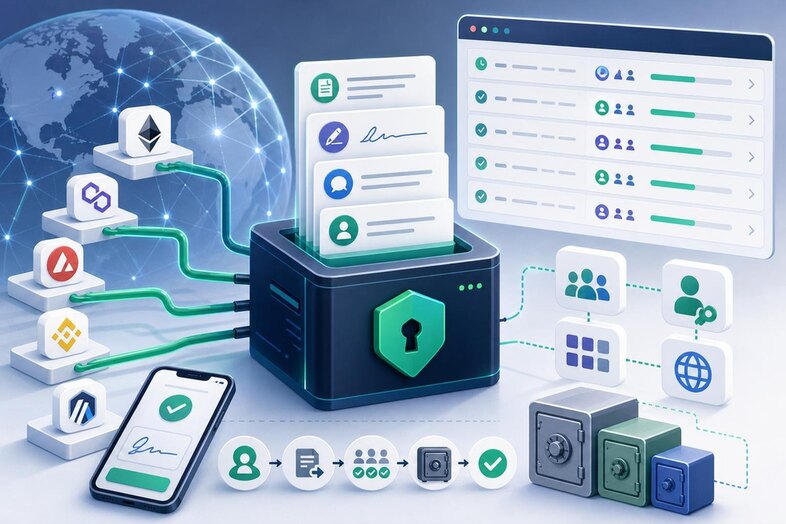
Safe Labs has launched the Safe Queue Service in production, bringing pending transactions, signatures, offchain messages and delegates into a single multichain API. The service already powers Safe{Wallet}, and integrations using the relevant Transaction Service endpoints must migrate before 19 January 2027.
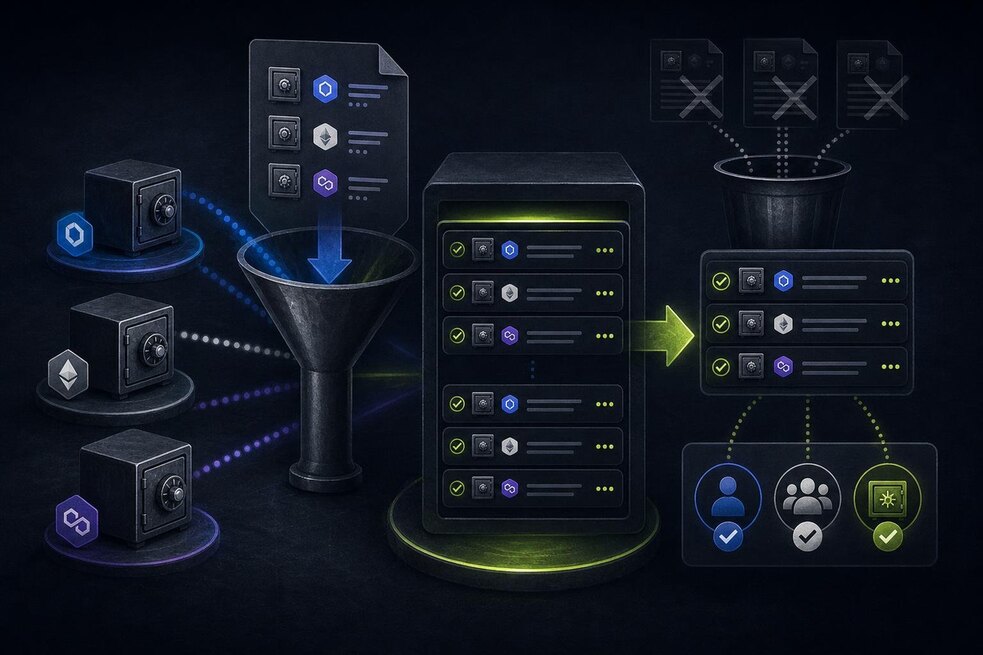
Previously, developers had to query the Safe Transaction Service separately for each chain and combine the responses to see pending activity across multiple Safes. The Queue Service can return pending data for up to 100 Safe-and-chain pairs in one request, reducing the need for separate per-chain queries and client-side merging.
What integrations need to change
Safe Labs says integrations that propose transactions, collect signatures, handle offchain messages or manage delegates need to move to the new service. The corresponding Transaction Service endpoints are deprecated and are scheduled for removal on 19 January 2027.
The migration may require changes to the base URL and request bodies, as well as to the signing domain used for deletions and delegate operations. Existing API keys remain valid, and the Queue Service supports every network supported by the Transaction Service. Safe’s migration guide maps endpoints and fields and includes a checklist.
The service separates pending activity from other Safe data. Pending proposals and related offchain records belong in the Queue Service; executed history, balances and Safe details remain on the Transaction Service. Integrators therefore need to direct reads to the appropriate API rather than treating the Queue Service as a replacement for all Transaction Service functions.
One request for pending activity
A request can specify multiple Safes and chains, using entries such as safes=0xA:1:137. The response includes transactions that can still execute: the service filters out proposals below a Safe’s current nonce. It can also look up as many as 100 transactions by hash in one call, which can support history views that include notes and origin details.
Authentication is built into proposal submission. Every proposal needs at least one valid signature from an owner, a delegate or the owner of an owner Safe; unsigned proposals are rejected. The service calculates the transaction hash, identifies the proposer from the signature and records how that proposer was authenticated. This means proposals appearing in the queue have passed the service’s signature requirement and identify who submitted them.
How the queue handles changes
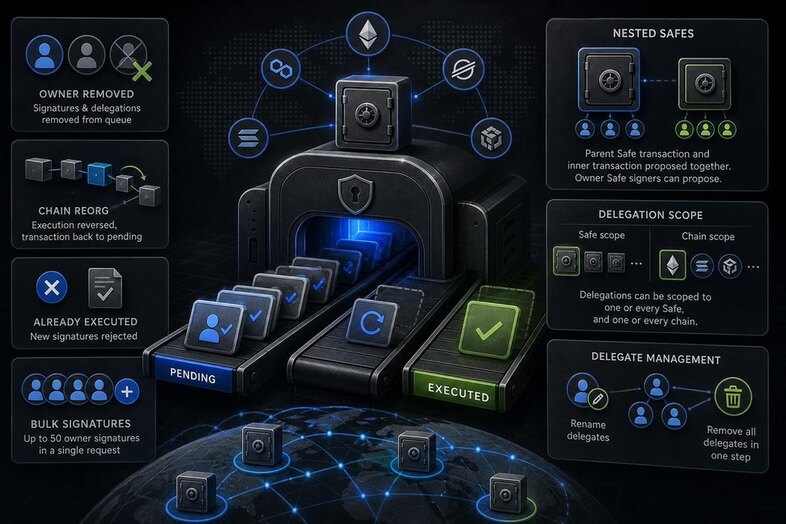
The service updates pending records when Safe ownership or chain state changes. If an owner is removed, their pending signatures and delegations are removed from the queue. If a chain reorganisation reverses an execution, the transaction returns to pending. The service also rejects new signatures for transactions that have already executed.
For teams handling many approvals, a single request can submit up to 50 owner signatures. The service also supports nested Safes: a parent Safe’s transaction and the inner transaction can be proposed together, and signers of the owner Safe can propose directly.
Delegations can be scoped to one Safe or every Safe, and to one chain or every chain. Delegates can be renamed, while an owner can remove all of their delegates in one step. These options cover delegation across multiple Safes and networks without changing the service’s separation between pending and executed data.
Safe Labs announced the service on 19 November 2026. Teams using the affected endpoints have until 19 January 2027 to migrate; after that date, the deprecated endpoints are scheduled to shut down.