Safe sets out transaction defence and policy plans at Devcon 8

Safe Labs, the Safe Ecosystem Foundation and Safe’s research and development team brought transaction security, wallet privacy and post-quantum preparedness to Devcon 8 in Mumbai, according to a recap published by the team on 17 November 2026. The programme included talks and panels on multisig security, offensive AI and account-level controls, alongside the first Ethereum Forward Defence Summit.
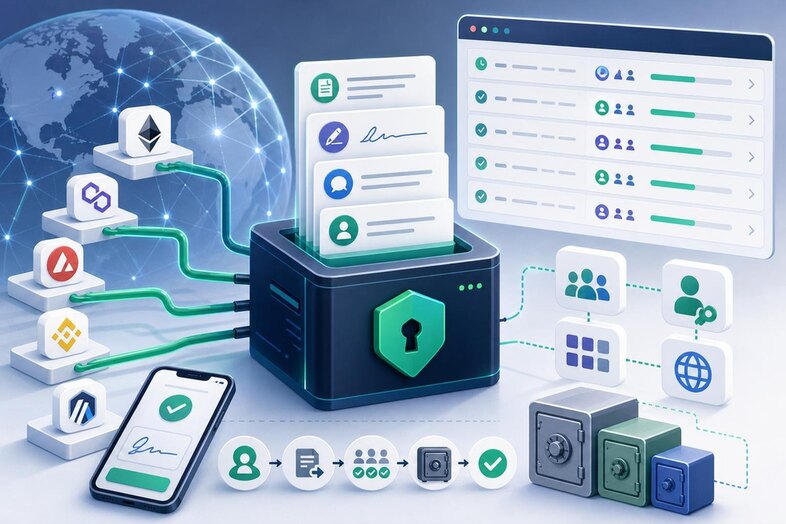
The team’s central security argument was that protecting signing keys does not, by itself, ensure that a transaction matches what a signer intended to approve. Safe presented several layers of forward defence, including its Safe Policy Engine, which is still being built, and Safenet, a protocol that checks transactions before execution. Some policies, including spending limits, are already live in Safe Pro.
Controls designed to limit signer risk
At the summit, Safe Labs CEO Rahul Rumalla discussed what happens when a signer’s account is compromised. The team’s approach, as described in the recap, is to place limits on what signers, agents or malicious actors can do, reducing the potential damage before an attack occurs. The proposed safeguards include bounds, delays and guards at the account level.
That distinction matters for multisig users. A multisig can require several approvals to authorise an operation, but the Safe team argued that this does not necessarily verify the operation’s intent. In its account of Dev Pramoth’s talk, Safe said attacks resulting in more than $6 billion in losses from multisig-secured organisations since 2024 did not depend on stealing keys or breaking cryptography. Instead, signers approved payloads that did not match what their screens showed. The recap attributes this figure and analysis to the presentation.
Safe framed account-level enforcement as a way to address that gap. Its five-layer model consists of the account, Policies, Shield, Safenet and onchain enforcement. The recap names these components but does not explain Shield’s operation in detail. The approach reflects a layered design: the team argued that individual safeguards need not be perfect if a later control can block an unsafe transaction.
There is a practical change already available to some teams. Safe says Safenet’s check has been part of the Safe{Wallet} transaction flow for Safe Pro teams since 21 October. The recap describes Safenet as a Safe Foundation protocol governed by Safe{DAO}; it does not present it as a feature available to every Safe{Wallet} user.

Safenet’s transaction checks
At the DeFi Security Summit, Safe Research and Development’s John Ennis explained Safenet’s security-market model. Independent security firms, called Sentinels, assess transactions against the public Safenet Charter and post a bond with each verdict. Validators then combine the verdicts into a single onchain attestation. If a user has enabled the optional Safenet Guard, the transaction can execute only when it carries a valid attestation.
The bond ties a Sentinel’s assessment to a financial stake: a Sentinel that gives an incorrect verdict risks its bond. This is the mechanism Safe described for encouraging accurate checks. The recap does not provide details such as bond sizes, the number of participating Sentinels or performance measurements, so it offers no basis for assessing those aspects.
Separately, Safe Research and Development’s Shebin John presented engineering work on the Safe Policy Engine. A guard checks transactions before execution, while the engine is designed to deny by default. The team also said changes to its rules would be subject to a public delay. Safe described the engine as under development, with its code open source; the recap does not give a release date.
The first policies, including spending limits, are already live in Safe Pro, according to Safe. That separates the available controls from the broader engine still being built. The team said it gathered user and security-community feedback in Mumbai to inform further development.
Forward defence, AI and cryptography
Safe used “forward defence” to describe acting before a threat reaches an account, rather than relying on warnings after an attack. AI featured prominently in that discussion. The team said AI can make attacks faster and cheaper, while also speeding up audits. It cautioned that AI-generated findings still need human review, which can itself be affected by reviewers overlooking problems.
The Ethereum Forward Defence Summit brought auditors, protocol engineers and security researchers together for a working session. Co-hosted with Lido and supported by the Ethereum Foundation and ChainSecurity, it included seven roundtables on subjects ranging from operational security and formal verification to AI bug bounties. Each group was asked to take an Ethereum security problem and present a proposed response.
Post-quantum preparedness was another recurring subject. At a discussion with Justin Drake, the recap described Bunker Mode as a plan to prepare Ethereum for cryptographic change before it becomes necessary. It also referred to transaction formats that could let accounts rotate to post-quantum signatures. The team compared this possibility for smart accounts to changing a lock rather than moving house; the source does not give a deployment timeline for either measure.
These discussions connect to wallet design because a smart account’s security rules and signing arrangements can be changed at the account level. However, the recap does not claim that Safe has already implemented post-quantum signatures. It reports preparedness as a topic under discussion, not a completed migration.

Wallet privacy and address-poisoning risks
Safe also took part in discussions about privacy in wallets. A panel at Cypherpunk Congress 3 considered network-level privacy, the linking of addresses and amounts, private wallet recovery, and intermediaries that may see a transaction before it reaches the chain. Safe described these as practical challenges, with the final steps toward wallet privacy particularly difficult.
At Devcon, Julia from Safe Labs joined a separate panel on everyday privacy practices. The recap presents privacy as a matter of user control over what information is shared, but does not announce a new privacy feature for Safe{Wallet}.
Another presentation covered address poisoning, in which attackers try to make a user select a deceptive address. Safe said the tactics discussed included zero-value transfers that clutter transaction histories, fake tokens in token lists and lookalike Safe accounts. The team said Safe{Wallet} includes checks intended to help users identify poisoned addresses. It did not provide technical details or effectiveness figures for those checks.
Six days of talks and industry discussions
Safe’s programme spanned six days, according to its recap, with six panels and six presentations listed in its numerical summary. Its schedule included a wallet-security panel, interviews about security and smart accounts, and a talk on onchain security markets. A workshop reviewed incidents from the preceding two years, including cases involving Bybit, Drift, Coldcard, KelpDAO, Cetus, Balancer, GMX, SwissBorg and Venus, as well as phishing, social engineering and infostealers.
The team also co-hosted a dinner with Gnosis and CoW Swap for 80 founders, researchers and developers. A panel there discussed the Ethereum Economic Zone, synchronous composability and the prospects for Ethereum to grow as one ecosystem. These sessions sat alongside the technical programme, rather than announcing a new Safe integration or product.
Safe’s recap says feedback from builders moving from externally owned accounts to multisigs included requests for time locks and guards. The team said this input would inform its work on Safe{Wallet}. For users and integrators, the confirmed distinction is between controls already live in Safe Pro, including spending limits, and the broader Policy Engine, which Safe described as forthcoming without specifying a launch date.