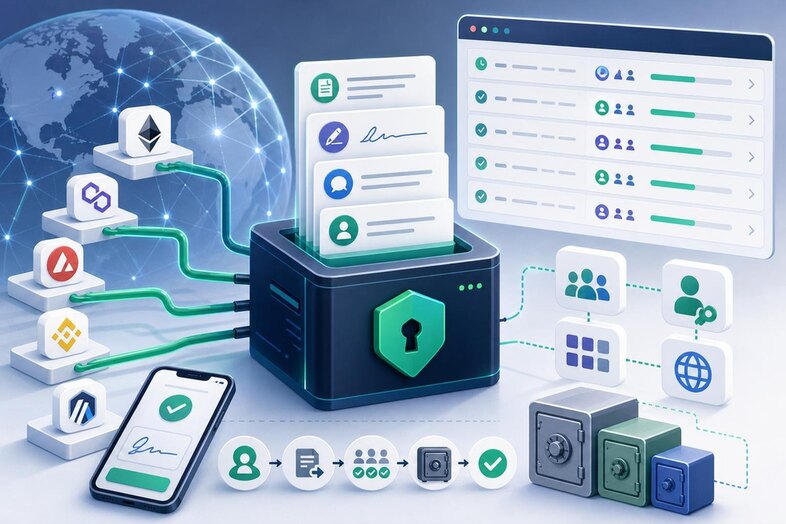
Japan’s FSA weighs DeFi access limits and self-custody wallet safeguards

Japan’s Financial Services Agency (FSA) is considering whether to restrict access to decentralised finance services without adequate anti-money laundering and counter-terrorist financing controls, according to a discussion paper reported by Cointelegraph.
The paper also raises questions about the responsibilities of businesses that interact with DeFi and about possible safeguards for self-custodial wallets. It presents issues for discussion, not rules that the regulator has adopted.
Who could be responsible for DeFi compliance?
The FSA’s questions address a challenge in regulating services that describe themselves as decentralised but may retain centralised elements. The regulator asks how authorities should identify parties responsible for those services, and whether providers of front ends that let users access decentralised exchanges should come under financial regulation.
That distinction matters because a service’s decentralised description does not, by itself, settle who performs functions that could carry regulatory responsibilities. The paper does not specify which providers would be covered or propose a test for determining when a service is sufficiently decentralised. Instead, it asks how responsibility should be assigned where no clearly accountable party can be identified.
The FSA is also seeking views on whether regulated firms that engage with DeFi should help manage illicit-finance risks. The paper names stablecoin issuers, on- and off-ramp providers and financial institutions as examples. Its question concerns what role those businesses might play when no party responsible for regulatory compliance can be found.
No particular duty or enforcement approach is set out in the reported material. For wallet and DeFi developers, the immediate issue is therefore the regulator’s focus on interfaces, retained centralised features and the activities of regulated counterparties, rather than a confirmed new obligation.
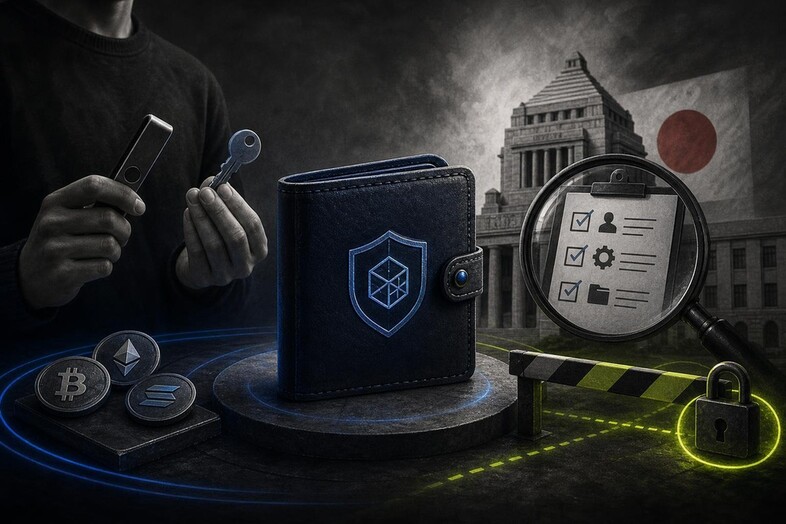
Self-custodial wallets are also under review
The FSA asked whether additional measures are needed for users of self-custodial wallets and for providers that only develop or sell software or hardware. Such wallets leave users in control of their assets rather than relying on a custodial provider. The regulator noted that direct regulation of wallet use and of providers limited to software or hardware has been uncommon internationally.
Japan already has requirements involving domestic virtual asset service providers and transfers to self-custodial wallets. According to the FSA, those providers must collect information and keep records on transactions involving such wallets. The paper also points to possible anti-fraud measures, including a cooling-off period for transfers from newly opened crypto exchange accounts to self-custodial wallets.
The cooling-off period is presented as a potential measure, not as a new requirement that is already in force. The distinction is relevant for users and wallet developers: the source confirms existing information and record-keeping duties for domestic service providers, while further transfer restrictions remain under consideration.
The paper’s questions also leave open how any additional safeguards might apply to companies that supply wallet software or hardware without providing a custodial service. It does not announce a licensing regime for those providers or give details on how a cooling-off period would operate. Those points remain unresolved in the material reported by Cointelegraph.
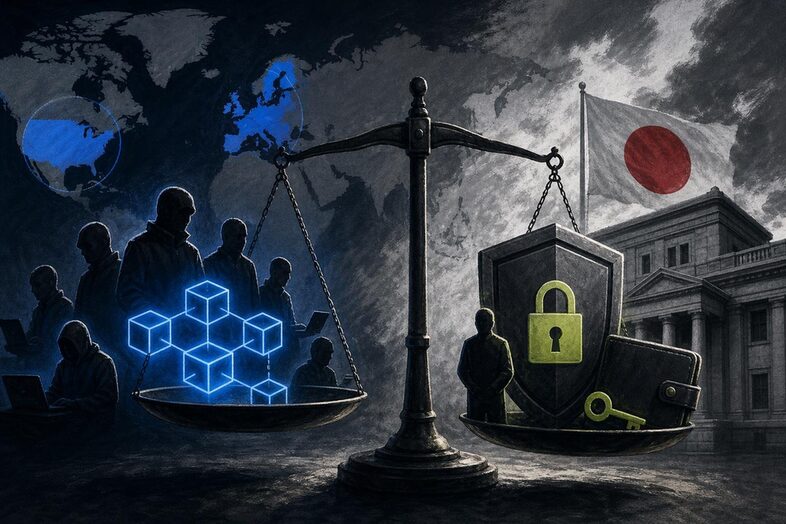
International approaches remain different
The discussion reflects a broader disagreement over how to identify regulated parties in DeFi. Cointelegraph reported that the European Union’s Markets in Crypto-Assets regulation excludes fully decentralised crypto services without intermediaries. In the United States, regulators have largely focused on the financial activities involved and on how much control developers or operators exercise.
The US CLARITY Act, described in the report as stalled, seeks to clarify which DeFi participants should face financial regulation. The comparison does not establish that Japan will follow either approach. It shows that the question of responsibility remains unsettled across major markets, with different emphasis placed on intermediaries, activity and control.
For Ethereum and smart-account developers, the FSA’s interest in front-end providers and software vendors is pertinent because access to onchain services can involve multiple actors. The paper does not specifically discuss Ethereum, ERC-4337, modular smart accounts or wallet standards, and it does not state that those technologies will face particular rules. Its direct relevance is the broader examination of who enables access to DeFi and who might be accountable when compliance responsibility is unclear.
The regulator’s deliberations form part of a financial strategy announced in July to promote onchain finance. The FSA is targeting early 2027 for the initiative’s interim findings; no final rules or implementation timetable are given in the report.