Safe Labs introduces Safe Pro Workspace for professional self-custody

Safe Labs introduced Safe Pro on 6 October 2026, adding an organisational Workspace for teams managing Safe accounts, transaction workflows and operating controls. The service brings account information and team activity into a shared view, while the underlying accounts remain under their owners’ control.
Safe Pro targets teams responsible for treasury or protocol operations, where several accounts, networks and signers can make day-to-day coordination complex. Safe Labs says the product adds coordination, policy controls and professional support without taking custody of keys or assets.
A shared view across Safe accounts
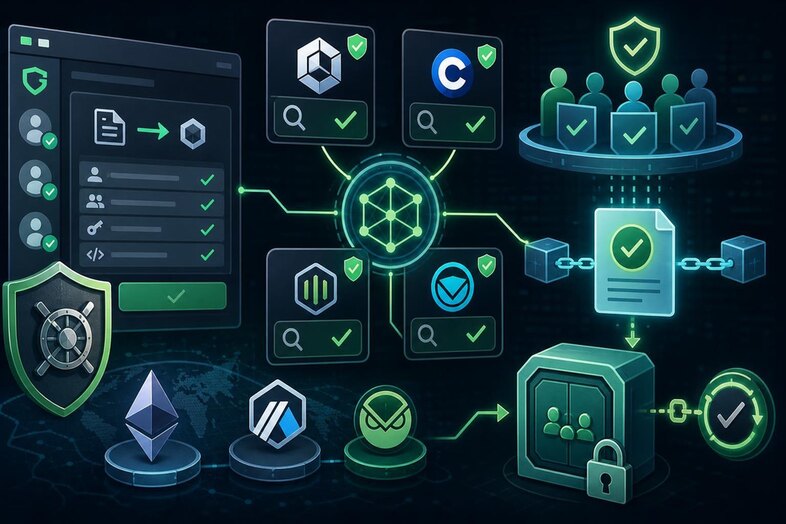
Teams can add Safe accounts to a Safe Pro Workspace and view balances, pending transactions and activity across them. The Workspace also includes a shared address book and an activity log, giving members a common place to review account-related information.
A Security Hub displays supported security signals for accounts included in the Workspace. Safe Labs says teams can use these signals to review their account setup. The announcement does not specify which signals the Hub covers, so the feature should not be read as a guarantee that an account is secure or free of risk.
The Workspace is an organisational layer around Safe accounts, rather than a replacement for their account-level controls. Safe{Wallet} remains the foundation for shared self-custodial control: account owners set the signers and approval threshold, and those settings remain unchanged when an account is added to Safe Pro.
Transaction preparation does not confer signing power
Safe Pro separates transaction preparation from authorisation. A proposer can prepare a transaction for signers to review, but the proposer role does not grant signing or execution authority. That distinction lets teams assign preparation work to people who understand the operational task while leaving approval with the account’s signers.
This division matters for organisations where different people prepare, review and approve transactions. Safe Labs presents the proposer role as a workflow function, not an additional route to control an account. Transactions still follow the Safe account’s own onchain rules.
Spending limits use an onchain module
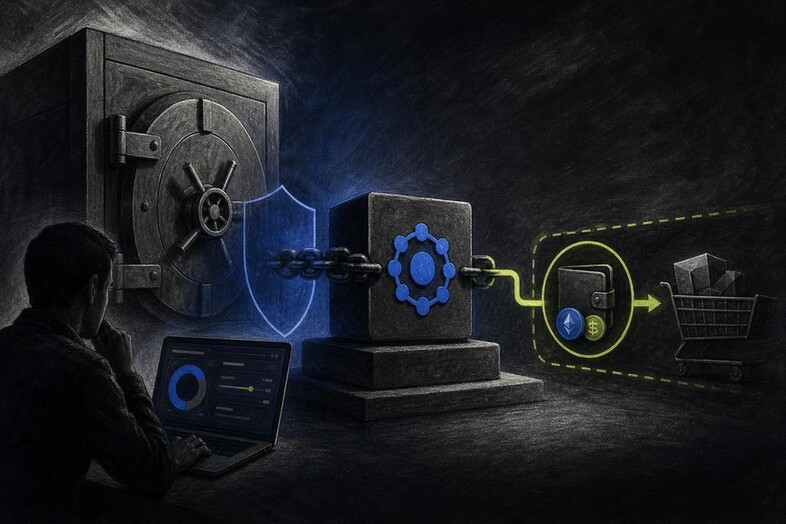
On eligible Safe Pro plans, a team can view and prepare spending limits from its Workspace. A configured limit gives a designated address bounded authority to spend a specified token up to the set limit. The open-source Allowance Module enforces that limit onchain.
The scope is deliberately specific. A spending limit delegates defined routine activity; it does not grant general authority to act for the organisation. Work outside the configured allowance continues to rely on the account’s approval process. Safe Labs describes Safe Pro as enforcing policy through Safenet, while its launch details identify the Allowance Module as the mechanism that enforces spending limits onchain.
The announcement does not provide further technical details about Safenet or describe other policy types. Integrators should therefore distinguish the described spending-limit function from any broader assumptions about policy enforcement.
Custody and account access remain separate
Safe Labs says Safe Pro does not hold a team’s keys or assets. Adding an account to a Workspace does not change its signers or threshold configuration, and the underlying account remains independently accessible through Safe{Wallet}.
Account control and signing rights also do not depend on an active Safe Pro subscription. If a Workspace subscription ends, Safe accounts and their signing rights remain accessible, although the Workspace layer may lock. Any bounded spending authority continues to depend on the onchain configuration the team has separately chosen to set up.
This separation defines what the new service changes: it provides a place for teams to coordinate account operations, but does not replace the account’s custody or authorisation model.

Support, plans and access terms
Safe Pro has Starter, Business and Enterprise options. Starter includes standard support; Business adds priority support and guided onboarding. Safe Labs says Enterprise support commitments are tailored to the customer.
New Workspaces can start a 30-day trial of either Starter or Business without providing a payment method. The launch announcement lists Starter at €189 per month and Business at €669 per month, excluding VAT. Enterprise pricing is tailored to requirements. Plan limits and current terms apply, though the announcement does not enumerate those limits.
Teams that created a Workspace before the Safe Pro launch can claim 60 days of free access if the owner claims it between 6 October and 5 December 2026. The free period starts when the owner claims access, and the selected Starter or Business plan limits apply. No payment details are required and Safe Labs says it will not charge automatically. If a team does not subscribe after the free period, the Workspace locks again, while its Safe accounts and signing rights remain available.
Designed for organisational operations
Safe Labs says it developed Safe Pro in response to operational needs reported by teams already using Safe. Those needs included maintaining signing integrations and internal tools, tracking signer responsibilities across accounts, coordinating approvals and setting boundaries for routine activity. The company positions the product as a way to bring those tasks into a shared Workspace.
The launch announcement also describes early partner work on policy controls. Lido said its committees and operations use Safe under a DAO mandate and that it was working with Safe on an engine for enforcing limits and approval rules onchain. The source does not state that these planned or collaborative controls are already available as a general feature beyond the spending-limit details it describes.
Safe Labs says Safe Pro uses the same account architecture that secures more than $60 billion in onchain assets and over $1 trillion in onchain volume. Those figures are presented by the company as characteristics of the underlying architecture, not as performance metrics for Safe Pro itself. Existing Workspace owners have until 5 December 2026 to claim the announced 60-day access period.